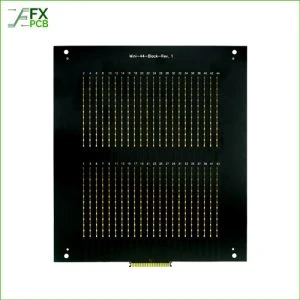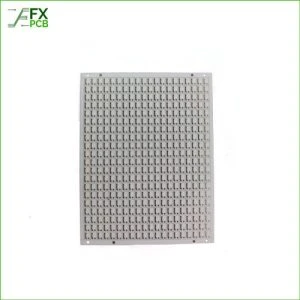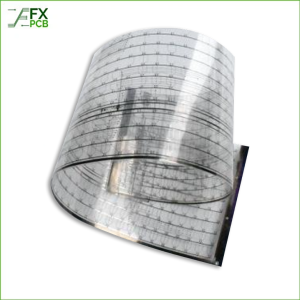
In electronics, there is a common confusion when referring to PCB and PCBA; they seem similar, but they are both individually different. The PCB is a Printed Circuit Board and PCBA is actually the Assembly of Printed Circuit Board called as Printed Circuit Board Assembly. They both are connected but it is necessary to understand the difference and actual functioning of both PCB and PCBA.
A PCB is designed as a board or electronic pad for holding components for electronic signals transmission and PCBA is a completely organized electronic board having organized and assembled components. Let’s discuss PCB and PCBA individually to understand their differences

FX PCB can provide the ALN(Aluminum oxide) and AIO203(Aluminum Nitride) Ceramic PCB, we can make ENEPIG, ENIG, Immerison silver surface,you can check the material datesheet and our capability from the below tables.
The ceramic circuit board has the following characteristics: high-temperature resistance, high electrical insulation, low dielectric constant, low dielectric loss, high thermal conductivity, good chemical stability, and the thermal expansion is almost can be coefficients of components.
Ceramic PCB is actually made of electronic ceramic materials and can be made into various shapes.
It is an undeniable fact that the PCB or Printed Circuit Boards are the foundation of modern electronic devices. The flat boards of PCB are made up of non-conductive fiberglass or laminated composite Epoxy.
They support mechanically and provide the medium for electrical connections in an electronic device. They are designed as carriers of electrical connection between various components of electronic devices. They contain inscribed or printed pathways (as the name shows), to conduct Electronic signals to connect different parts of printed circuit boards. These conductive pathways are copper circuits embedded internally in the board or present on the outer surface of a flat board of PCB.
PCB as discussed above is one of the most important electronic parts and can be called as the foundation of modern electronic devices.
The primary function of PCB is to be serving as a supporting carrier of electronic components in an electronic device. PCB is responsible to enable proper electronic signal transmission between electronic components of an electronic device. It must be surprising to know that almost every electronic device we use commonly such as our mobile phones, TV, calculators, digital watches, laptops, and computers contains customized PCBs. Not only standard electronic devices but specialized military weapon systems are also electronically based on Printed Circuit Boards.
PCBs are customizable and also used in manufacturing medical devices, industrial machinery and equipment of the automotive industry.
PCBs are compact and small in size. They are absolutely a revolutionary invention to minimize the size of electronic devices. They are embedded with high-density wiring and are light in weight. They have high functionality and are relatively low in cost.
Different types of PCBs are:
It is the basic type of PCB. They are often called single-sided boards. They have components spread on one side of the flat board while electronic signals-conducting patterns are on the other side. They are simply constructed of a substrate layer, then a layer of conductive material, typically copper, which is protected by a solder mask and silk screen.
They are used in simple electronic devices such as LED driver circuits, electronic toys, etc.
Double-layered PCB contains layers of conducting copper both above and below the substrate.
It provides double the amount of area for electronic signals transmission as compared to a single-layered board. This makes the PCB more compact due to the reduction in size and increase in functionality. Double-sided boards are commonly used in UPS systems, industrial appliances, phones, HVAC Systems, etc.
They are constructed with more than two layers of conducting copper. Multi-layer boards are used in complex applications such as data storage equipment, GPS technologies, and high-tech medical devices.
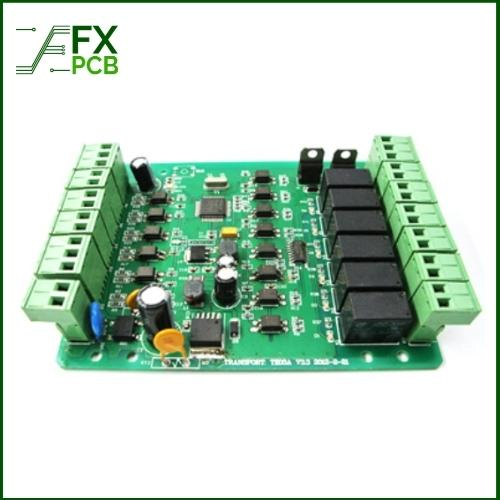
PCB is a board while PCBA is a complete PCB Assembly that contains all required electronic components mounted to enable the functionality of the designed electronic device. That means when a PCB is equipped and assembled with all essential electronic components it becomes PCBA.
It is the most commonly used technique to manufacture a PCBA. In this technique, solder paste is used for attaching or mounting the essential electronic components directly on the surface of the PCB. The Surface Mount Technology (SMT) allows attaching the components on both sides of circuit boards.
The steps involved in manufacturing are:
In this technology of manufacturing PCBA Assembly, the components that are to be attached to the circuit boards have long leads. The THT PCBAs use PC boards that have holes drilled, in which those leads containing components are inserted.
The steps involved in manufacturing are:
PCBA is the main functional core of electronic devices.
It is essential to understand the basic functions and differences between PCB and PCBA.
To make it clear, PCB is a simple flat bare board waiting for electronic components to be assembled over it through, Surface Mount Technology (SMT) or Through-Hole Technology (THT) to utilize its functionality by becoming PCBA. PCB is not functional or usable while PCBA is a finished, completed, and usable circuit board.
PCB is simpler, while PCBA is complex. And obviously, PCB is less costly than PCBA. PCB Assembly cannot be created without Printed Circuit Boards; to understand more clearly, we can say PCBs are the first step to making PCBAs. If you are involved in electronic device manufacturing, and looking for a trusted manufacturer of PCB and PCBA, you can blindly go for FX PCB.
At FX PCB, you can effortlessly get high-quality and less costly products with a guarantee of on-time supplies.
Visit here https://sfxpcb.com/

I am Peter Gong. I have been working in PCB and PCBA industry for 15+ years now. I have been a part of the PCB revolution with my dedication to circuit board technologies and creative ideas. I write in FX PCB to impart my knowledge on PCB and PCBA for all circuit board lovers, manufacturers, and users.
WhatsApp us