Introduction
Engineers and product development teams face a common challenge when bringing PCB-based products to market: coordinating separate vendors for design review, component sourcing, fabrication, assembly, and testing creates friction at every handoff. Each vendor transition introduces communication delays, quality gaps, and rework risk that can derail launch schedules. Research shows that 45% of product launches are delayed by at least one month, and McKinsey data reveals that a product six months late to market earns 33% less profit over five years.
Turnkey PCB assembly solves this by consolidating every stage of production under one roof. A single manufacturer handles everything from engineering file review and component procurement to bare board fabrication, SMT and through-hole assembly, testing, and final delivery — all the customer provides are design files.
This guide covers the definition of turnkey assembly, the complete manufacturing process, key benefits compared to other models, and how to select the right partner for your project.
Key Takeaways
- Turnkey PCB assembly means one manufacturer handles everything from file review to final delivery
- The process covers component sourcing, fabrication, SMT/THT assembly, inspection, testing, and shipping
- One supplier handles procurement, fabrication, and testing — cutting costs, eliminating coordination overhead, and compressing lead times
- Scales seamlessly from first prototype to mass production without switching suppliers or rebuilding supply chains
What Is Turnkey PCB Assembly?
The term "turnkey" originates from real estate—a property ready to occupy the moment you turn the key. In PCB manufacturing, turnkey assembly means the supplier takes full ownership of the production pipeline, delivering finished, tested boards ready for integration into your end product.
As the customer, you provide the design and specs:
- Gerber files (RS-274X format)
- Bill of Materials (BOM) with manufacturer part numbers
- Pick-and-place files
- Special assembly instructions
The manufacturer handles everything else — sourcing components, fabricating bare boards, assembling and soldering, testing functionality, and shipping finished units.
Full Turnkey vs. Partial Turnkey vs. Consigned Assembly
Three engagement models exist in PCB assembly, each with different responsibility splits:
- Full turnkey: The manufacturer sources all components and manages all processes
- Partial turnkey: You supply some components (typically proprietary or pre-purchased parts) while the manufacturer sources the rest
- Consigned assembly: You provide all components; the manufacturer only performs assembly and testing
Which model fits your project depends on budget, lead time, and how much control you want over component sourcing. Full turnkey is typically the fastest path from design files to finished boards — especially when working with an EMS provider that carries deep local component stock and has established supplier relationships.
What Does the Turnkey PCB Assembly Process Look Like?
Step 1: Design File Submission
To initiate a turnkey order, submit these core files:
- Gerber files (RS-274X format) — the universal manufacturing blueprint
- Bill of Materials (BOM) with manufacturer part numbers (MPN)
- Centroid or pick-and-place file specifying component coordinates and orientation
- Assembly drawings for complex builds or special instructions
Step 2: Engineering Review and DFM Analysis
Before production begins, the manufacturer reviews submitted files for Design for Manufacturability (DFM) issues. This step catches layout errors, pad sizing problems, component clearance issues, and BOM discrepancies before a single board is built.
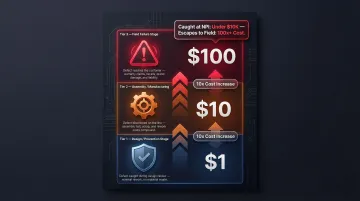
The financial impact is captured by the "1-10-100 Rule": every dollar spent preventing defects during design saves $10 during assembly and $100 in field failures. According to research on electronics manufacturing services, a defect caught during early NPI costs under $10,000 — the same defect escaping to manufacturing escalates 10X, and reaching the field exceeds 100X.
SFX PCB provides free DFM analysis on every order, identifying issues like insufficient spacing, annular ring problems, and footprint mismatches before production. Their engineering team responds within 12 hours to new submissions, preventing costly respins.
Step 3: Component Sourcing and Procurement
The manufacturer sources all required components from authorized distributors, leveraging bulk purchasing power and established supplier relationships to control costs and ensure part authenticity.
Counterfeit components represent a growing threat: ERAI reported 1,055 suspect counterfeit parts in 2024—a 25% year-over-year increase and the highest level since 2015. 85.2% of these were newly reported parts not seen in previous reports — meaning parts sourced outside authorized channels require strict scrutiny.
Turnkey manufacturers with access to large local component inventories can cut lead times. SFX PCB maintains access to 600,000+ local components in the Shenzhen region, enabling 24-hour assembly turnaround once parts are available.
Step 4: PCB Fabrication
Bare board fabrication occurs in parallel with component procurement. This stage covers:
- Layer stackup design and material selection
- Imaging, etching, and drilling
- Copper plating and surface finish application (HASL, ENIG, OSP)
- 100% electrical testing of each bare board
SFX PCB performs 100% electrical testing on all bare boards before assembly, catching continuity and impedance issues that would otherwise cause assembly failures.
Step 5: PCB Assembly (SMT, THT, and Mixed)
The assembly stage combines automated and manual processes:
- Solder paste application via stencil with ±0.015mm printing precision
- SMT component placement using automated pick-and-place machines (Yamaha equipment at SFX PCB)
- Reflow soldering in controlled-atmosphere ovens
- Through-hole insertion and wave or selective soldering for THT components
- Mixed-technology assembly combining SMT and THT on the same board
Modern assembly lines handle components as small as 01005 (0402 metric), BGAs up to 54mm, and fine-pitch parts down to 0.25mm spacing.
Step 6: Inspection, Testing, and Quality Verification
Multi-stage quality control ensures reliability across four verification methods:
| Method | What It Catches | Key Limitation |
|---|---|---|
| AOI (Automated Optical Inspection) | Missing parts, tombstoning, solder bridges — 98-99% detection rate | Surface-visible defects only |
| X-ray Inspection (AXI) | Voids, bridges, head-in-pillow defects under BGAs and QFNs per IPC-7095 | Requires trained interpretation |
| Functional Circuit Testing (FCT) | Real-world operating performance and firmware validation | Requires custom test fixtures |
| IPC-A-610 Compliance | Defines pass/fail criteria for Class 2 and Class 3 assemblies | Class 3 requires ≥75% barrel fill vs. Class 2's 50% threshold |
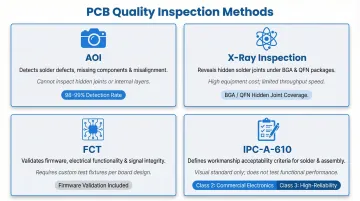
AOI catches what's visible on the surface. X-ray inspection goes further, penetrating component bodies to verify solder joints that AOI physically cannot reach. FCT then confirms the board performs as designed — not just that it looks correct.
SFX PCB maintains IPC-A-610 Class 2/3 compliance and ISO 13485 certification for medical-grade assemblies, demonstrating systematic risk management and strict process validation.
Step 7: Packaging and Delivery
Finished, tested boards are packaged to prevent ESD and physical damage before shipping. Documentation such as test reports and compliance certifications are included as required. Standard delivery timelines range from 1-2 weeks for production orders, with 24-hour prototyping available when components are in stock.
Key Benefits of Choosing Turnkey PCB Assembly
Simplified Vendor Management
Working with a single turnkey supplier means one point of contact, one purchase order, and one accountability chain. Managing separate vendors for fabrication, sourcing, and assembly creates constant handoff friction — and when quality issues emerge, pinning down accountability becomes a drawn-out process. When responsibility is fragmented across multiple vendors, determining accountability for quality issues becomes a complex blame game. Turnkey manufacturing embeds holistic quality control at each stage; because one partner owns the final product, quality gaps at vendor handoff points are eliminated.
Faster Time-to-Market
Consolidating fabrication, procurement, and assembly under one roof removes the wait times that stack up between vendor handoffs. Outsourcing to a turnkey EMS provider compresses production timelines by eliminating wait times between vendor handoffs.
Quick-turn prototyping can deliver assembled boards within 24–48 hours once parts are available, which matters most during iterative development when design changes are frequent. SFX PCB's access to 600,000+ locally stocked components supports that pace, letting engineers validate and revise without restarting the supply chain from scratch.
Cost Efficiency Through Bulk Purchasing
Turnkey manufacturers buy components in volume from authorized distributors, passing savings to customers. By consolidating tasks under one roof, EMS providers negotiate better pricing and allocate hard-to-find parts more effectively during component shortages.
Hidden costs shrink too: fewer shipping events, fewer component handling errors, and less internal overhead for procurement coordination. Consigned assembly may look cheaper upfront since there's no markup on parts, but once you factor in procurement time, shipping coordination, and rework risk from mismatched components, the total cost typically favors turnkey.
Consistent Quality Control Throughout Production
When a single supplier owns every step, quality standards like IPC-A-610 Class 2/3 are applied consistently from bare board through final assembly. ISO 13485 certification demonstrates systematic risk management and strict process validation crucial for preventing defects in life-support and critical-care electronics.
Unlike multi-vendor models where quality gaps emerge at handoff points, turnkey providers maintain traceability systems that track the origin and characteristics of every component, ensuring consistency across batches.
Scalability from Prototype to High-Volume Production
The same design files, BOM, and supplier relationship that produce a 10-piece prototype can support a 10,000-piece production run — no re-qualification, no supplier switching, no process revalidation required.
SFX PCB supports orders from as few as 5 prototype units through tens of thousands of production boards, maintaining ISO-certified quality control and professional engineering support regardless of order size. That continuity means your manufacturing process scales with your product — not against it.
Turnkey vs. Partial Turnkey vs. Consigned Assembly
Three assembly models exist, each with distinct trade-offs:
| Feature | Full Turnkey | Partial Turnkey | Consigned Assembly |
|---|---|---|---|
| Component Sourcing | Manufacturer sources all parts | Customer supplies some; manufacturer sources rest | Customer supplies all parts |
| Supply Chain Risk | Shifted to EMS provider | Shared between customer and EMS | Borne entirely by customer |
| Internal Overhead | Minimal FTE hours needed | Moderate coordination required | High (dedicated procurement/logistics staff) |
| Pricing Transparency | Bundled into unit cost | Moderate | High (customer sees exact component costs) |
| Best Use Case | Mass production & standard designs | Projects with proprietary parts | Small batches & strict traceability needs |
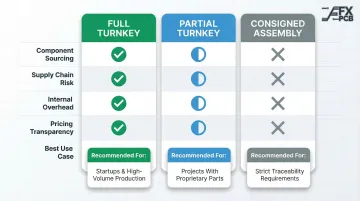
Choosing the right model depends on your team's capacity and project constraints:
- Full turnkey — best for startups and production teams focused on development, not logistics
- Partial turnkey — suited for projects with pre-purchased or proprietary components
- Consigned assembly — preferred where strict component traceability is required (medical, military, aerospace)
One misconception worth addressing: consigned assembly looks cheaper at first glance. But when you account for internal procurement hours, shipping coordination, and rework risk from counterfeit components, the total cost frequently favors turnkey.
How to Choose the Right Turnkey PCB Assembly Partner
Selecting the right turnkey partner requires evaluating several critical criteria:
Manufacturing Certifications and Standards
The facility should hold ISO 9001 for general quality management, ISO 13485 for medical devices, or AS9100 for aerospace applications. Personnel should be certified to IPC-A-610 (Acceptability of Electronic Assemblies) and J-STD-001 (Requirements for Soldered Electrical and Electronic Assemblies). For high-reliability products, the EMS must have dedicated IPC-A-610 Class 3-certified inspectors.
Assembly Capabilities and Testing Infrastructure
Verify the partner covers your technical requirements across both assembly and test:
Assembly capabilities:
- SMT and THT placement
- BGA and fine-pitch components (0.25mm pitch or finer)
Testing infrastructure:
- Inline AOI for surface defect detection
- 3D AXI — mandatory for Class 3 hidden joints
- ICT (In-Circuit Test) and FCT (Functional Circuit Test)
Supply Chain Depth and Counterfeit Prevention
A strong partner should:
- Maintain local component inventory to reduce lead times
- Source exclusively through authorized distributors to prevent counterfeit parts
- Provide proactive DFM feedback before production begins
Traceability and Documentation
For Class 3 and ISO 13485 compliance, the partner must provide traceable batch documentation, including lot-level tracking for components and consumables like solder paste, linking them to specific operators and process steps.
SFX PCB as a Turnkey Partner
SFX PCB meets these criteria with over 15 years in PCB and PCBA manufacturing. Key capabilities include:
- Certifications: ISO9001, ISO14001, and ISO13485; IPC-A-610 Class 2/3 compliance for both standard and high-reliability assemblies
- Free DFM analysis on every order catches design issues before production, preventing costly respins
- 600,000+ local components in Shenzhen enabling 24-hour prototyping turnaround once parts are available
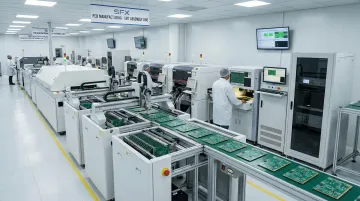
- Advanced equipment: Yamaha SMT lines, 3D AOI, X-ray inspection, and functional testing
- Scalable production: 5-piece prototypes through tens of thousands of units — same supplier, consistent quality, direct manufacturer pricing
Frequently Asked Questions
What is a turnkey PCB assembly?
Turnkey PCB assembly is an end-to-end manufacturing service where the supplier handles all steps—component sourcing, fabrication, assembly, testing, and delivery—based on design files provided by the customer. You submit Gerber files and a BOM; the manufacturer delivers finished, tested boards.
How much does it cost to have a custom PCB made?
Cost depends on board complexity (layer count, dimensions, materials), component costs and availability, assembly type (SMT vs THT vs mixed), order volume, and turnaround speed. Request a quote with your Gerber files and BOM for an accurate figure based on your specific requirements.
What files do I need to submit to start a turnkey PCB assembly order?
You need Gerber files (RS-274X format), a Bill of Materials with manufacturer part numbers, and a centroid/pick-and-place file specifying component coordinates. Optional assembly drawings help clarify complex builds or special instructions.
What is the difference between full turnkey and partial turnkey PCB assembly?
Full turnkey means the manufacturer sources all components and manages every process. Partial turnkey means you supply some components (typically proprietary or pre-purchased parts) while the manufacturer sources the rest and handles assembly.
How long does turnkey PCB assembly typically take?
Prototype lead times range from 24 hours to 5-7 business days once all parts are available. Low-to-medium volume production typically takes 2-4 weeks depending on complexity and component availability, though quick-turn services can compress that timeline at a higher cost.
Can I use the same turnkey partner for both prototypes and mass production?
Yes. A well-equipped turnkey manufacturer can support the full product lifecycle—from a handful of prototype boards through high-volume production—using the same design files and established processes. This eliminates the risk of switching suppliers mid-development while maintaining consistent quality at every stage.