
Modern-day smartphones are doing wonders with the developed camera, higher refreshing rate, and hardware improvement. Similarly, contemporary warfare has seen tremendous use of drone helicopters to spy on enemies.
All these have been made possible because of the advancement of PCB and PCBA. These two technologies have changed the communication, electronics, military, medical device, etc. industries dramatically.
Yet we found that many people consider the PCB and PCBA the same thing. Hence, we decided to discuss the difference between PCB and PCBA in a way so everyone can understand it.
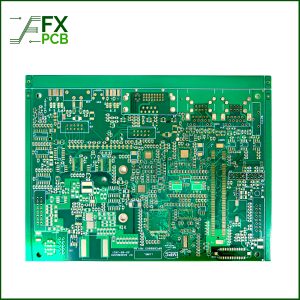
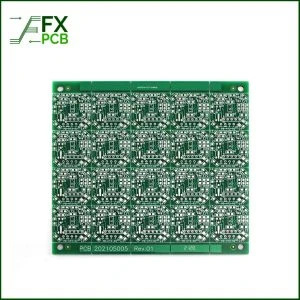
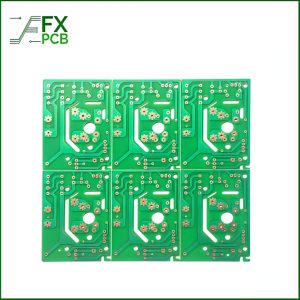
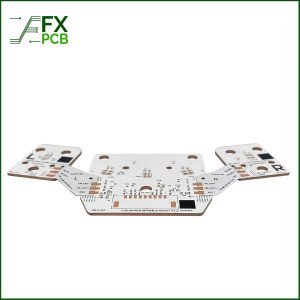
PCB is a bare circuit board consisting of only the signal transmitting and heat dissipation substrate. The PCBA, on the contrary, consists of different electronics components including ICs, resistors, etc.

FX PCB can provide the ALN(Aluminum oxide) and AIO203(Aluminum Nitride) Ceramic PCB, we can make ENEPIG, ENIG, Immerison silver surface,you can check the material datesheet and our capability from the below tables.
The ceramic circuit board has the following characteristics: high-temperature resistance, high electrical insulation, low dielectric constant, low dielectric loss, high thermal conductivity, good chemical stability, and the thermal expansion is almost can be coefficients of components.
Ceramic PCB is actually made of electronic ceramic materials and can be made into various shapes.
PCB, as we all know, stands for Printed Circuit Board. It is the fundamental of modern-day and highly complicated electronic devices. It is made for both electrical transmission and mechanical support to the other components.
The base is made of different metals, ceramics, or other elements and it works as the substrate. It dissipates the heat to reduce the temperature of the components mounted over it. This is the mechanical support of the PCB. And electronic transmission refers to the data transfer from one component to another through the base.
However, the PCB is a bare electric circuit board. It has only the substrate and conductive parts. The electronic device manufacturer will mount the electronic components over the bare PCB. This process is called the PCBA which stands out for the PCB Assembly.
The PCBA has a different layout and uses a soldering process to complete the entire component mounting and assembly process.
Although you might not understand, PCBA and PCVB comes with subtle differences. If you are in the PCB and PCBA industry or electronic device manufacturing, understanding these distinctions between the two essential parts of your electronic device production is important.
The key differences are-
Different manufacturers follow a standard PCBA manufacturing process. The main difference comes in the soldering process primarily. Also, there are distinctions in the component types also mounted over the PCB.
The twocomponent types are-
Another part of PCBA manufacturing is the soldering technique. Usually, the PCB and the required components to build the PCBA passes through the pick and place machine to initiate the actual soldering process.
When the PCB passes through the pick and paste machine, it places the components on the bar circuit board. It follows a design layout provided by the PCBA manufacturer to arrange the components in the proper way. The bare circuit board however has soldering glue pasted on it before it enters the machine for attaching the electronic parts.
These days, manufacturers like FX PCB usean automatic soldering process to mount the components safely over the circuit board permanently. It is also known as the reflow soldering system. It is a fast and safe process of manufacturing a bulk amount of PCBA without any faults.
Previously, manufacturers opted for the wave soldering mechanism. However, it has become outdated now. It has many flaws which have forced the PCBA producers to leave it forever.
The main difference between PCB and PCBA lies in the manufacturing mechanism and steps. PCB follows a generic manufacturing system. On the contrary, PCBA design varies according to the requirements of the device manufacturer. The layout is done in software and a machine is used to arrange the components according to the layout.
FX PCB manufactures both PCB and PCBA and also serves you with the design layout so you can build your device on it at ease. Also, our pricing is competitive and we offer delivery in any amount you need for the project.

I am Peter Gong. I have been working in PCB and PCBA industry for 15+ years now. I have been a part of the PCB revolution with my dedication to circuit board technologies and creative ideas. I write in FX PCB to impart my knowledge on PCB and PCBA for all circuit board lovers, manufacturers, and users.
WhatsApp us