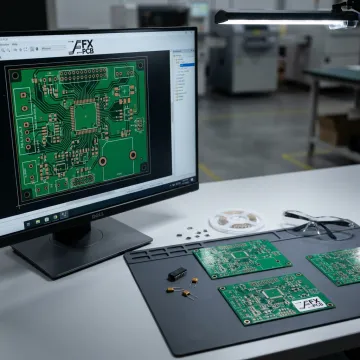
What is a single sided PCB used for?
A single sided PCB is used for electronics that need dependable circuits without dense routing, such as LED lighting, power modules, consumer products, sensors, simple controls, and educational devices. Because copper appears on only one side, the design is easier to fabricate, inspect, and assemble. FX PCB supports these boards from DFM review through manufacturing, assembly, and electrical testing.
What is the difference between single sided PCB and double-sided PCB?
A single sided PCB has conductive copper on one side of the insulating substrate, while a double-sided PCB has copper on both sides connected through plated holes or vias. Single sided boards are usually lower cost and simpler to manufacture. Double-sided boards allow denser routing, smaller layouts, and more complex circuits when one copper layer cannot support all required connections.
What is a single sided PCB?
A single sided PCB is a printed circuit board with one conductive copper layer used to connect electronic components. Components are typically mounted on one side, with traces routed on the opposite or same functional side depending on the design. These boards are common when the circuit is simple, cost control matters, and manufacturing speed is important.
When should I choose a single sided PCB design?
Choose a single sided PCB when your circuit has low to moderate complexity, limited component count, straightforward routing, and enough board space for wider traces and clearances. It is a strong option for simple power circuits, LED products, control boards, and cost-sensitive devices. If routing becomes crowded or jumpers increase, a double-sided design may be more reliable.
Can single sided PCBs support through-hole and SMT components?
Yes. Single sided PCBs can support through-hole components, SMT components, or mixed assembly depending on the board layout and product requirements. FX PCB offers SMT, THT, and mixed PCB assembly, allowing teams to combine modern compact components with connectors, switches, terminals, or larger mechanical parts that may require through-hole mounting.
How does DFM improve single sided PCB design?
DFM, or Design for Manufacturability, checks whether a board can be fabricated and assembled reliably before production begins. For single sided PCBs, this includes reviewing trace width, spacing, drill sizes, solder pads, routing conflicts, copper balance, and component placement. FX PCB provides free DFM analysis for every order to reduce rework, delays, and avoidable manufacturing issues.
What files are needed for single sided PCB manufacturing?
Manufacturing typically requires Gerber files, drill files, board specifications, and, if assembly is needed, a bill of materials and pick-and-place data. Clear fabrication notes should identify thickness, copper weight, solder mask, silkscreen, surface finish, and quantity. Complete files help FX PCB quote accurately, review manufacturability, source components, and build boards according to your intent.
How are single sided PCBs tested for quality?
Bare single sided PCBs can be verified with 100% electrical testing to confirm opens and shorts are not present. Assembled boards may also receive AOI inspection, X-ray inspection where appropriate, and functional testing with custom jigs. FX PCB’s quality approach follows IPC-A-610 Class 2/3 standards when applicable, supporting dependable performance before shipment.